
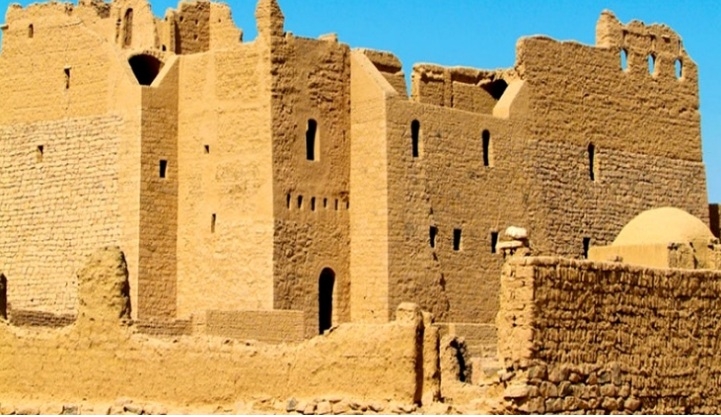
St. Simeon Monastery, also known as the Monastery of Anba Simeon or Deir Anba Simeon, is one of the most significant early Christian monastic sites in Egypt. Located on the west bank of the Nile near the city of Aswan, the monastery stands as a remarkable example of Coptic monastic architecture and religious life in Late Antiquity and the early medieval period. Although now in ruins, the monastery provides invaluable insight into the spiritual, social, and economic dimensions of early Egyptian monasticism.
The site is traditionally associated with Saint Simeon the Tanner, also known as Anba Hadra, a revered figure in the Coptic Orthodox Church. Over centuries, the monastery developed into a major religious and communal center before its eventual abandonment, likely due to environmental pressures and regional instability. Today, St. Simeon Monastery remains an important archaeological site and a symbol of Egypt’s rich Christian heritage.
Historical Background
Early Christianity in Upper Egypt
Christianity reached Egypt in the first century CE and rapidly spread along the Nile Valley. By the third and fourth centuries, Egypt—particularly Upper Egypt—had become a center of Christian monasticism. The desert environment, combined with social and political changes in the Roman and Byzantine periods, encouraged the rise of ascetic lifestyles focused on prayer, solitude, and communal religious life.
Upper Egypt was especially influential in shaping monastic traditions. Figures such as Saint Anthony the Great and Saint Pachomius laid the foundations for eremitic (solitary) and cenobitic (communal) monasticism. These traditions later spread throughout the Christian world.
Within this context, St. Simeon Monastery emerged as a structured monastic settlement that blended spiritual devotion with practical organization.
Foundation of the Monastery
The monastery is believed to have been founded in the sixth or seventh century CE, although some traditions suggest an earlier origin. It was dedicated to Saint Simeon, a bishop and ascetic figure associated with Aswan. According to Coptic tradition, Saint Simeon renounced worldly life and devoted himself to spiritual leadership, charity, and pastoral care.
The monastery was originally known as Deir Anba Hadra, named after Saint Simeon’s episcopal title. Over time, the name evolved into Deir Anba Simeon, which remains its most common designation today.
Saint Simeon (Anba Hadra)
Life and Legacy
Saint Simeon, also called Anba Hadra, is a prominent figure in Coptic hagiography. He is traditionally described as a man of humility and compassion who dedicated his life to God and service to others. Before entering monastic life, he is said to have held a respected position within society, which he later abandoned in pursuit of spiritual discipline.
As bishop of Aswan, Saint Simeon played a key role in strengthening Christian communities in southern Egypt. He was known for his ascetic practices, charitable works, and leadership during times of hardship.
Role in Monastic Tradition
Saint Simeon’s influence extended beyond his lifetime. His teachings emphasized obedience, communal harmony, and spiritual discipline. These values shaped the organization and daily life of the monastery that bore his name.
Pilgrims and monks regarded the monastery as a sacred site associated with his presence and legacy. Even after the monastery’s decline, devotion to Saint Simeon continued within the Coptic Church.
Architectural Layout
General Design
St. Simeon Monastery is one of the best-preserved examples of a fortified monastery in Egypt. Its architecture reflects both spiritual needs and practical concerns, particularly security.
The monastery is enclosed by thick stone and mudbrick walls, forming a roughly rectangular compound. These fortifications were designed to protect the monastic community from raids and environmental threats.
Main Structures
The Church
At the heart of the monastery lies the main church, which served as the spiritual center of the complex. The church followed traditional Coptic architectural patterns, including:
-
A basilica-style layout
-
A sanctuary with multiple altars
-
Domed roofing structures
-
Decorative niches and wall paintings
Traces of frescoes and inscriptions suggest that the church interior was once richly adorned, reflecting theological themes and biblical narratives.
Living Quarters
The monastery included extensive residential areas for monks. These consisted of small cells grouped around courtyards, providing both communal interaction and personal solitude.
Each cell typically contained minimal furnishings, emphasizing the monks’ commitment to asceticism.
Storage and Economic Facilities
St. Simeon Monastery was largely self-sufficient. Archaeological evidence indicates the presence of:
-
Granaries
-
Kitchens
-
Workshops
-
Storage rooms
These facilities supported daily life and allowed the monastery to function as an economic unit within the surrounding region.
Daily Life in the Monastery
Spiritual Practices
The daily routine of monks at St. Simeon Monastery revolved around prayer, worship, and contemplation. The monastic schedule included:
-
Regular communal prayers
-
Scripture reading
-
Fasting and ascetic discipline
-
Participation in liturgical services
Silence and obedience were central values, reinforcing spiritual focus and communal harmony.
Work and Self-Sufficiency
In addition to prayer, monks engaged in manual labor. This was considered a form of worship and discipline. Activities included:
-
Agriculture
-
Weaving and textile production
-
Copying manuscripts
-
Craftsmanship
The monastery’s economic activities allowed it to support not only its residents but also travelers and the poor.
Community and Hospitality
St. Simeon Monastery served as more than a secluded spiritual retreat. It functioned as a hub of hospitality and charity, offering shelter to pilgrims, traders, and the needy.
This role strengthened its ties with surrounding communities and enhanced its reputation throughout Upper Egypt.
Historical Development
Byzantine Period
During the Byzantine era, the monastery flourished as Christianity became the dominant religion of Egypt. Imperial support and increased pilgrimage contributed to its growth.
The monastery’s fortifications were likely strengthened during this period in response to regional instability.
Early Islamic Period
Following the Arab conquest of Egypt in the seventh century, Christian monasteries continued to operate under new political conditions. St. Simeon Monastery remained active for several centuries, adapting to changing circumstances.
Historical evidence suggests that Christian monastic life persisted in Upper Egypt longer than in many other regions.
Decline and Abandonment
By the thirteenth century, the monastery was largely abandoned. Several factors likely contributed to its decline:
-
Reduced monastic populations
-
Economic challenges
-
Shifts in trade routes
-
Increased insecurity
-
Environmental changes, including water scarcity
Despite its abandonment, the site remained known to local communities and travelers.
Archaeological Exploration
Rediscovery and Excavation
St. Simeon Monastery attracted the attention of archaeologists and historians in the nineteenth and twentieth centuries. Excavations revealed extensive architectural remains and artifacts, including:
-
Pottery
-
Manuscript fragments
-
Tools and domestic items
These findings provided valuable insights into monastic life and regional history.
Preservation Efforts
The site is currently protected as an important historical monument. Conservation efforts aim to stabilize remaining structures and prevent further deterioration.
Tourism and scholarly interest have increased awareness of the monastery’s significance.
Religious and Cultural Significance
Importance to the Coptic Church
St. Simeon Monastery holds a special place in Coptic Christian tradition. It represents the endurance of faith and monasticism in southern Egypt.
Saint Simeon remains a venerated figure, commemorated in Coptic liturgical calendars and traditions.
Symbol of Egyptian Christian Heritage
Beyond its religious role, the monastery stands as a testament to Egypt’s diverse cultural and religious history. It reflects centuries of coexistence, adaptation, and spiritual creativity.
The Monastery Today
Today, St. Simeon Monastery is a prominent archaeological and tourist site near Aswan. Visitors can explore its walls, churches, and living quarters, gaining a tangible connection to early Christian life.
Although no longer an active monastic community, the site continues to inspire spiritual reflection and historical inquiry.
Legacy
St. Simeon Monastery represents one of the most complete surviving examples of early monastic settlement in Egypt. Its ruins preserve the memory of a community dedicated to prayer, labor, and service.
As a bridge between ancient and medieval Egypt, the monastery contributes to a deeper understanding of Christian history, architectural development, and human resilience in challenging environments.
See Also
-
Coptic Orthodox Church
-
Monasticism in Egypt
-
Saint Anthony the Great
-
Pachomian Monasticism
Conclusion
St. Simeon Monastery stands as a powerful reminder of the spiritual and cultural vitality of early Christian Egypt. Through its architecture, history, and enduring legacy, it continues to offer insight into the lives of those who sought God in the desert.
Its story reflects not only religious devotion but also the broader historical forces that shaped Egypt across centuries. As scholarship and preservation efforts continue, St. Simeon Monastery remains a vital link to the past and an enduring symbol of faith and perseverance.