
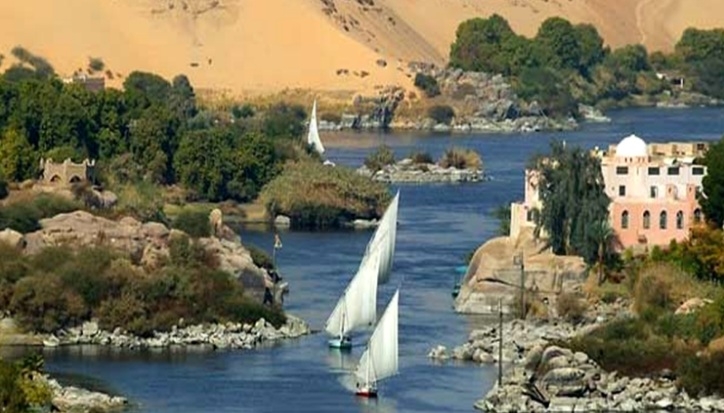
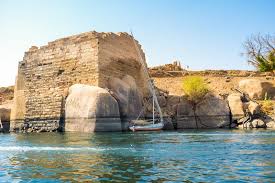
Elephantine Island is one of Egypt’s most historically significant islands, located in the Nile River at the southern frontier of the city of Aswan. Widely regarded as a natural gateway between Egypt and Nubia, the island has played a central role in trade, religion, and political administration for over five millennia. Known in ancient Egyptian as Abu or Yebu, meaning “elephant” or “ivory,” the island was a major center for the ivory trade and a strategic outpost for the protection of Egypt’s southern border. Today, Elephantine Island is both an archaeological treasure and a thriving community, offering a blend of ancient ruins, vibrant Nubian culture, and unique landscape views that attract scholars and visitors from around the world.
Etymology and Name Origins
The name “Elephantine” is derived from the island’s association with elephants and the ivory trade, which flourished in antiquity. The ancient Egyptian name Abu (or Yebu) translates to “elephant,” likely referencing the island’s shape or its commercial role. The Greeks adopted the name Elephantine, which later influenced modern usage. Throughout history, the island has been referred to in numerous inscriptions, papyri, and classical texts, reflecting its long-standing importance.
Geography and Location
Elephantine Island lies directly opposite the modern city of Aswan, stretching approximately 1.2 kilometers in length. It forms the first major natural break in the Nile’s flow as the river enters Egypt from the south. As part of the First Cataract region, the island is surrounded by rugged granite formations and swirling river channels.
The island’s position made it a key frontier post in ancient times. It lies just north of the modern Aswan High Dam and Low Dam, and its geography once served as a natural defensive barrier. The western shores face the Nubian desert cliffs, while the eastern side opens toward Aswan’s bustling riverfront. The island also includes fertile agricultural areas and palm groves that have supported local communities for centuries.
Historical Overview
Prehistoric and Early Dynastic Periods
Archaeological evidence indicates that Elephantine Island has been inhabited since prehistoric times. Excavations have uncovered Neolithic tools, pottery, and early settlement remains. During Egypt’s Early Dynastic Period, the island grew into a fortified center controlling trade routes between Egypt and Nubia. Due to its strategic location, it became a focal point for expeditions seeking gold, incense, ivory, and exotic goods from the south.
Old Kingdom Prosperity
In the Old Kingdom, Elephantine served as the seat of Egypt’s southernmost nomarch—the governor of the First Upper Egyptian Nome. The island was a vital administrative post, responsible for taxation, border security, and diplomatic relations with Nubian communities. Temples and shrines dedicated to local deities began to appear, marking the island’s emergence as a religious hub.
Middle Kingdom and the Cult of Khnum
The Middle Kingdom witnessed the flourishing of Elephantine’s religious significance. The island became the primary center of worship for Khnum, the ram-headed god of creation and the Nile’s source. According to Egyptian mythology, Khnum fashioned human beings on a divine potter’s wheel and regulated the Nile’s annual floodwaters.
Large temples and ritual complexes dedicated to Khnum, his consort Satis, and their daughter Anuket were constructed. Kings of the 12th Dynasty commissioned major building projects, many of which survive today.
New Kingdom Expansion
During the New Kingdom, Elephantine Island remained a strategic garrison and religious center. Pharaohs such as Hatshepsut and Thutmose III expanded shrines and restored older temples. Granite quarries around Aswan provided stone for obelisks and monuments throughout Egypt, making Elephantine an important logistics point.
Late Period and Persian Rule
By the Late Period, Elephantine was home to a multicultural community, including Egyptians, Nubians, and a notable population of Jewish mercenaries. These Jewish inhabitants served as soldiers in the Persian garrison during the 5th century BCE. Their presence is documented through the famous Elephantine Papyri, which offer valuable insights into daily life, religion, and legal matters during this era.
Greco-Roman Period
Under the Ptolemaic and Roman empires, Elephantine continued to thrive. The island remained a military outpost, customs checkpoint, and religious center. Greek influences blended with Egyptian traditions, and temples were maintained or expanded under both administrations. Roman officials stationed on the island regulated trade and monitored the border with Nubian kingdoms.
Medieval Period and Islamic Influence
Following the Arab conquest in the 7th century CE, Elephantine Island’s importance gradually declined. However, the island retained a stable population of Egyptians and Nubians. Medieval travelers described the island’s landscape, temples, and local customs. Some ancient structures were repurposed as dwellings or administrative buildings.
Modern Era and Archaeological Discovery
In the late 19th and early 20th centuries, European archaeologists—especially German and French teams—conducted extensive excavations on Elephantine Island. These efforts uncovered temples, fortifications, and inscriptions spanning thousands of years.
Today, Elephantine Island is divided into three main zones:
-
The archaeological zone, containing temple ruins and historical sites
-
Nubian villages, such as Koti and Siou, with vibrant traditional culture
-
The Aswan Museum, housing artifacts from local excavations
Religious Significance
Elephantine Island was one of Egypt’s most sacred sites, particularly in its role as the mythological source of the Nile. Ancient Egyptians believed that Khnum controlled the floodwaters, an event crucial for agriculture and fertility.
The Triad of Elephantine
The local divine family included:
-
Khnum – god of the Nile’s source and creator of humanity
-
Satis (Satet) – goddess of war, fertility, and the Nile flood
-
Anuket – goddess of the river’s cataracts and nourishment
Together, this triad commanded widespread worship across Upper Egypt and Nubia.
Temples and Rituals
Major religious structures on Elephantine include:
-
Temple of Khnum: A large complex with ceremonial halls, courtyards, and a sacred lake
-
Temple of Satis: Located at the island’s southern tip, featuring multiple construction phases
-
Temple of Hekaib: Dedicated to a deified Old Kingdom official honored by later pharaohs
Priests carried out rituals to ensure proper flood levels and sustain agricultural prosperity. Festivals included processions, offerings, and water-related ceremonies.
The Elephantine Papyri
Among the island’s most important archaeological finds are the Elephantine Papyri, a collection of Aramaic documents dating from the 5th century BCE. These texts belonged to the Jewish mercenary community stationed on the island under the Persian Empire.
The papyri include:
-
Legal contracts
-
Marriage documents
-
Letters
-
Religious texts
-
Petitions to Persian and Egyptian authorities
Notably, they describe the Jewish temple on Elephantine, which coexisted alongside Egyptian temples until its destruction in 410 BCE. The papyri provide significant evidence of multicultural coexistence and early Jewish practices outside of Israel.
Archaeology and Excavations
Since the late 1800s, archaeologists have uncovered layers of settlements spanning from prehistory through the Islamic period. Key discoveries include:
Fortifications
Elephantine contained massive stone fortresses that protected Egypt’s southern border. Defensive walls, gates, and watchtowers reflect the island’s military importance.
Nilometer
One of Elephantine’s most famous structures is the Nilometer, a stairway leading into the river that measured the Nile’s water levels. It provided crucial data for predicting floods, taxation, and agricultural planning.
Residential Areas
Excavated homes reveal information about daily life, trade, and cultural interactions. Artifacts include pottery, tools, jewelry, and imported goods.
Inscriptions and Stelae
Inscriptions found on Elephantine document royal decrees, religious dedications, and historical records.
Recent Excavations
Ongoing research continues to uncover new information about the island’s occupation and its role as a frontier community. Modern archaeological teams use advanced methods such as ground-penetrating radar, 3D mapping, and environmental analysis.
Modern Communities on Elephantine Island
Despite its archaeological importance, Elephantine Island is also a living community. Two primary Nubian villages, Koti and Siou, occupy the center and northern areas of the island. Residents maintain Nubian cultural traditions, including colorful houses, traditional dress, music, and artisan crafts.
These villages rely on:
-
Agriculture (especially dates and vegetables)
-
Fishing
-
Tourism
-
Handicrafts such as pottery, baskets, and textiles
The people of Elephantine are known for their hospitality, cultural resilience, and preservation of Nubian heritage.
Tourism and Attractions
Elephantine Island has become a major tourist destination due to its combination of natural beauty and historical depth.
Key Attractions
-
Aswan Museum – Displays artifacts from excavations, including statues, tools, and papyri.
-
Nilometer of Elephantine – One of the best-preserved nilometers in Egypt.
-
Temple of Khnum – Features reconstructed sections and original carving fragments.
-
Temple of Satis – Offers panoramic views of the Nile and surrounding landscapes.
-
Nubian Villages – Explore traditional homes, markets, and cultural exhibitions.
-
Botanical Garden (Kitchener’s Island) – Adjacent to Elephantine and accessible by boat.
Tourist Activities
-
Boat tours around the First Cataract
-
Walking tours of archaeological sites
-
Cultural visits to Nubian homes
-
Photography of the Nile’s granite formations
-
Birdwatching and nature walks
The island is particularly attractive at sunset, when golden light illuminates the river and surrounding cliffs.
Ecology and Environment
Elephantine Island lies in a desert environment but features a microclimate shaped by the Nile. Its ecology includes:
-
Palm groves
-
Agricultural fields
-
Native flora such as acacias and tamarisks
-
Bird species like kingfishers, herons, and sunbirds
Environmental protection efforts focus on preserving the island’s archaeological remains while supporting sustainable tourism.
Cultural Impact and Legacy
Elephantine Island has influenced Egyptian culture, heritage, and scholarship for thousands of years. It remains a symbol of Egypt’s ancient relationship with the Nile, serving as:
-
A center of religious mythology
-
A testament to cross-cultural coexistence
-
A source of invaluable historical documents
-
A living example of Nubian culture
-
A hub for archaeological research
Its legacy continues through museums, academic publications, and international tourism.
Conclusion
Elephantine Island stands as one of Egypt’s most remarkable historical landscapes—an island where myth, trade, and civilization converged. From the worship of Khnum and ancient nilometers to the Jewish papyri and thriving Nubian communities, the island tells a story that spans millennia. Today, it remains a place of great archaeological value and cultural vibrancy, attracting researchers, tourists, and those fascinated by Egypt’s ancient heritage. Elephantine Island’s combination of history, religion, community, and natural beauty ensures its enduring significance as a treasure of the Nile.